Why It Takes Me Hours to Fall Asleep (And How Sleep Doctors Fix It)
Taking hours to fall asleep isn't normal. Sleep medicine identifies specific causes behind prolonged sleep onset and evidence-based solutions that work.
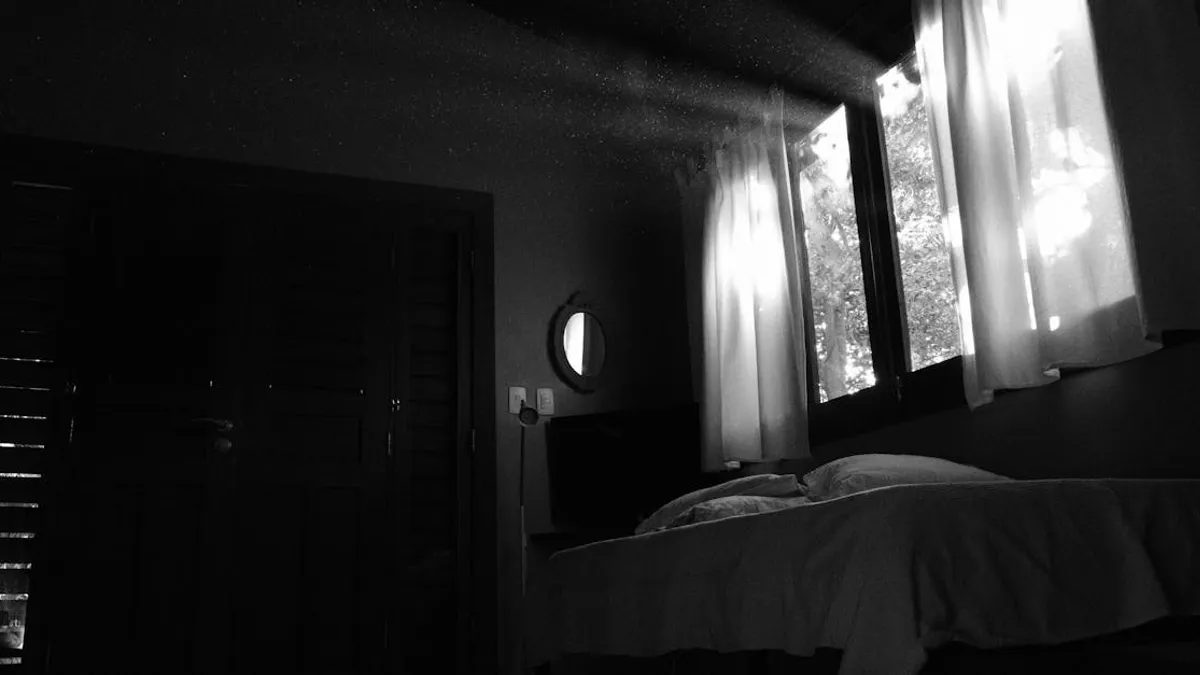
You check your phone: 12:47 a.m. You've been lying here since 10:30 p.m., running through tomorrow's presentation, replaying that awkward conversation from lunch, calculating how tired you'll be if you fall asleep right now. This scene repeats most nights, and you're starting to wonder if your brain is broken.
It's not. But taking hours to fall asleep isn't normal either.
In sleep medicine, we measure "sleep onset latency" — the time between lights-out and actual sleep. If yours consistently exceeds 30 minutes, that's clinically significant sleep onset insomnia. About 15% of adults deal with this nightly, according to the American Academy of Sleep Medicine's 2023 data, but most don't realize there are specific, fixable causes behind it.
Key Takeaway: Sleep onset delays over 30 minutes usually stem from three root causes: delayed circadian timing, hyperarousal states, or conditioned arousal responses. Each requires different interventions, and identifying your specific pattern is the first step toward faster sleep.
Your Circadian Clock Might Be Running Late
Your internal clock doesn't automatically sync to your desired bedtime. Some people are natural "night owls" with delayed sleep phase disorder — their melatonin doesn't start rising until 1 or 2 a.m., making 10 p.m. bedtimes feel impossible.
This isn't a willpower issue. Your suprachiasmatic nucleus (the brain's master clock) responds to light exposure patterns, not your work schedule. If you're getting bright light exposure late in the evening or insufficient morning light, you're essentially training your brain to stay alert when you want to sleep.
The fix involves strategic light manipulation. Dr. Phyllis Zee's research at Northwestern showed that 30 minutes of bright light (10,000 lux) within the first hour of waking can advance your sleep phase by 1-2 hours within a week. That's equivalent to standing outside on a sunny morning or using a light therapy box while having coffee.
Evening light matters just as much. Blue light from screens suppresses melatonin production for up to 3 hours, but even dim overhead lighting can delay your circadian rhythm. After 8 p.m., stick to table lamps and avoid overhead fixtures. Your phone's night mode helps, but it's not enough on its own.
The 6-Hour Caffeine Rule Actually Matters
Caffeine has a half-life of 5-7 hours, meaning if you have coffee at 2 p.m., 25% is still in your system at 10 p.m. That quarter-dose might not keep you obviously wired, but it can prevent the deep relaxation needed for sleep onset.
Research from the Sleep Medicine Institute found that caffeine consumed even 6 hours before bedtime reduced sleep efficiency by 16% and delayed sleep onset by an average of 22 minutes. Your afternoon coffee isn't just affecting your energy — it's sabotaging your sleep timing.
Try the Circadian Rhythm Calculator — build your personalized daily schedule for better sleep. Free, works in your browser, no signup.
Hyperarousal: When Your Nervous System Won't Downshift
Some brains get stuck in high gear. Hyperarousal isn't just feeling "wired" — it's a measurable state where your sympathetic nervous system remains activated when it should be winding down. People with hyperarousal often have elevated core body temperature, faster heart rates, and increased cortisol production in the evening.
This shows up in different ways. Maybe you feel physically tired but mentally alert. Or you notice your heart racing when you lie down, even though you felt calm moments before. Some people experience muscle tension that seems to appear out of nowhere once they're horizontal.
Stress is the obvious culprit, but hyperarousal can persist even after stressful periods end. Your nervous system can get stuck in this pattern, treating bedtime as a threat rather than safety.
Progressive Muscle Relaxation Targets the Root Cause
Unlike generic "relaxation," progressive muscle relaxation (PMR) specifically addresses the physical tension component of hyperarousal. You systematically tense and release muscle groups, teaching your nervous system the difference between tension and relaxation.
Start with your toes. Tense them for 5 seconds, then release completely for 10 seconds. Notice the contrast. Move up through your calves, thighs, abdomen, arms, and face. The whole sequence takes 15-20 minutes and directly counters the muscle tension that keeps your brain alert.
Dr. Richard Bootzin's research showed that people who practiced PMR nightly reduced their sleep onset time by an average of 37 minutes within two weeks. The key is consistency — your nervous system needs to learn this new pattern.
Conditioned Arousal: When Your Bed Becomes a Stress Trigger
Your brain is constantly making associations. If you've spent months lying awake frustrated in your bed, your brain may have learned to associate your bedroom with wakefulness and anxiety rather than sleep. This is conditioned arousal, and it's incredibly common among people who take hours to fall asleep.
The solution sounds counterintuitive: spend less time in bed. This is called sleep restriction therapy, a core component of CBT-I explained treatment that has an 80% success rate for sleep onset problems.
Here's how it works: If you're currently in bed for 8 hours but only sleeping 5, you restrict your time in bed to 5.5 hours. Yes, you'll be tired initially, but this builds "sleep pressure" — your brain's drive to sleep becomes stronger than your conditioned arousal response.
The 20-Minute Rule Breaks the Association
If you're lying awake for more than 20 minutes, get out of bed. Go to another room and do a quiet, boring activity until you feel sleepy, then return to bed. This prevents your brain from linking your bed with frustration and wakefulness.
I know this feels wrong when you're exhausted, but staying in bed awake reinforces the problem. Your bed should be associated with sleep, not with lying awake calculating how tired you'll be tomorrow.
Medical Factors That Delay Sleep Onset
Sometimes the issue isn't behavioral — it's medical. Untreated sleep apnea can cause sleep onset delays because your brain unconsciously resists falling into a state where breathing becomes compromised. Restless leg syndrome creates physical discomfort that prevents relaxation. Hormonal changes during perimenopause can disrupt both circadian timing and temperature regulation.
Medications can also interfere with sleep onset. Antidepressants, particularly SSRIs, can delay REM sleep and make falling asleep more difficult. Beta-blockers can suppress melatonin production. Even some antihistamines have paradoxical effects in certain people, causing alertness instead of drowsiness.
If you've tried behavioral interventions for 3-4 weeks without improvement, consider a sleep medicine evaluation. Sleep studies can identify underlying disorders, and sometimes a simple medication adjustment resolves the problem.
When Melatonin Actually Helps (And When It Doesn't)
Melatonin isn't a sleeping pill — it's a timing signal. It works best for circadian rhythm issues, not anxiety-driven insomnia. If your problem is racing thoughts or physical tension, melatonin won't address the root cause.
For circadian timing issues, take 0.5-3mg of melatonin 3 hours before your desired bedtime, not right before you want to sleep. Higher doses aren't more effective and can cause grogginess the next day. The goal is to signal your brain that it's time to start winding down, not to knock you out.
The 3-Week Sleep Onset Protocol
Based on sleep medicine research, here's a systematic approach to reducing sleep onset time:
Week 1: Light and Timing
- Get 30 minutes of bright light within 1 hour of waking
- No caffeine after 2 p.m.
- Dim lighting after 8 p.m.
- Consistent bedtime and wake time, even on weekends
Week 2: Add Arousal Management
- Practice PMR nightly starting 30 minutes before bed
- Implement the 20-minute rule strictly
- Keep bedroom temperature at 65-68°F
Week 3: Sleep Restriction
- Calculate your average sleep time from the past week
- Restrict time in bed to that amount plus 30 minutes
- Maintain consistent wake time regardless of sleep quality
Track your sleep onset time each night. Most people see improvement by week 2, with significant changes by week 3.
Frequently Asked Questions
Why can't I fall asleep when I'm exhausted? Physical exhaustion doesn't guarantee mental quieting. Your sympathetic nervous system can remain activated from stress, caffeine, or conditioned arousal responses, keeping your brain alert despite body fatigue.
How long should it take to fall asleep? Normal sleep onset latency is 10-20 minutes. Taking longer than 30 minutes consistently indicates a sleep disorder that needs addressing.
Should I get out of bed if I can't sleep? Yes, after 20 minutes of lying awake. This prevents your brain from associating your bed with wakefulness and frustration.
Does melatonin help with sleep onset delays? Melatonin works best for circadian rhythm shifts, not anxiety-driven insomnia. Take 0.5-3mg three hours before your desired bedtime for timing adjustments.
Can anxiety medication help me fall asleep faster? Short-term, yes. Long-term, sleep medications can worsen sleep architecture and create dependency. CBT-I provides lasting solutions without side effects.
Tonight, start with the light exposure protocol. Set your alarm 30 minutes earlier tomorrow and get outside within an hour of waking. Cut off caffeine by 2 p.m. These two changes alone can shift your sleep onset time within a week. (For more, see Week 1 of the sleep program.) (For more, see Week 10: sleep restriction therapy.)
Frequently asked questions
Keep going
Science-backed help, delivered daily. No gadget reviews, no affiliate links. Just what works.
Sleep better tonight.
One short, practical email a day with real sleep science and techniques you can use before bed. Unsubscribe anytime.
Keep reading

Stress-Induced Insomnia: When Life Wrecks Your Sleep
Your stress response hijacks sleep through hyperarousal and cortisol spikes. Here's what happens in your body and how to break the cycle before it becomes chronic.

Exhausted But Can't Fall Asleep? The Hyperarousal Paradox Explained
Why being exhausted can actually make it harder to fall asleep. The science behind hyperarousal and practical steps to break the cycle tonight.

Waking Up Before Your Alarm Every Day? Here's What Your Body Is Telling You
Is waking up before your alarm good or bad? Sleep doctor explains when it's healthy circadian rhythm vs concerning sleep fragmentation.

Why Do I Wake Up Exactly 4 Hours After Falling Asleep Every Night?
That 3-4 hour wake-up isn't broken sleep—it's your brain transitioning between sleep stages. Here's why it happens and what actually helps.