The Optimal Bedroom Setup for Sleep: Everything That Actually Matters
Transform your bedroom into a sleep sanctuary with evidence-based temperature, lighting, noise, and humidity guidelines that actually work.
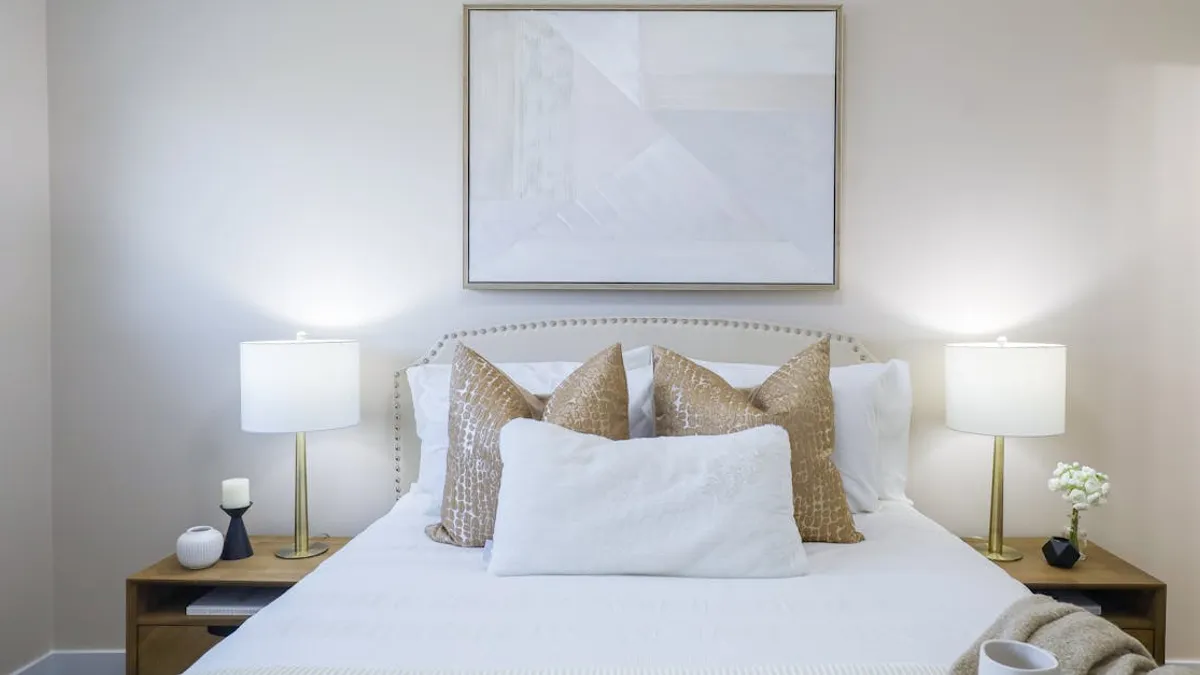
Your bedroom is sabotaging your sleep, and you probably don't even know which part is doing the damage.
Maybe it's the 72-degree thermostat setting that feels cozy but keeps your core body temperature too high for deep sleep. Or the streetlight bleeding through your "room-darkening" curtains, suppressing melatonin production all night. Could be the humidity from your morning shower that's still lingering at bedtime, making the air feel thick and uncomfortable.
Here's what most sleep advice gets wrong: it treats your bedroom like a nice-to-have luxury instead of what it actually is — a precision tool for sleep. Your brain and body follow specific physiological processes to fall asleep and stay asleep. When your environment doesn't support those processes, you fight an uphill battle every single night.
The good news? You can measure and fix every factor that matters. We're not talking about expensive renovations or buying seventeen different gadgets. We're talking about understanding exactly what your sleep system needs and giving it those conditions.
Key Takeaway: Your optimal bedroom setup isn't about creating a spa-like atmosphere — it's about hitting specific, measurable targets for temperature (65-68°F), darkness (<5 lux), noise (<30 dB), and humidity (30-50%) that align with your body's natural sleep processes.
Temperature: The Most Critical Variable You Can Control
Your core body temperature drops 1-2 degrees Fahrenheit in the hour before sleep onset. This isn't just correlation — it's a biological requirement. When your bedroom is too warm, you're literally fighting against your circadian rhythm's attempt to initiate sleep.
The research is remarkably consistent. A 2012 review by Okamoto-Mizuno and Mizuno analyzed dozens of sleep studies and found that bedroom temperatures between 65-68°F (18-20°C) produced the highest sleep efficiency and the most time spent in deep sleep stages. Go above 75°F or below 60°F, and sleep quality measurably deteriorates.
But here's where it gets interesting: your hands and feet need to be warm while your core stays cool. This seeming contradiction is why you might find yourself sticking one foot out from under the covers — your body is trying to regulate heat through your extremities.
How to Measure and Optimize Bedroom Temperature
Get a digital thermometer that shows both current temperature and humidity (more on that later). Place it about three feet from your bed at mattress height. Check it right before you get into bed, not when you wake up — morning readings don't tell you what happened during your sleep window.
If you're consistently above 68°F:
- Lower your thermostat to 65-67°F two hours before bedtime
- Use a ceiling fan on low speed to improve air circulation
- Consider a cooling mattress pad if you share a bed with someone who runs warm
- Take a warm shower 90 minutes before bed (counterintuitive, but the rapid cooling afterward enhances your natural temperature drop)
If you're below 65°F:
- Warm the room to 66-67°F but use breathable bedding
- Add a thin layer rather than cranking up the heat
- Wear socks to bed to keep extremities warm while maintaining cool core temperature
The bedroom temperature for sleep research goes deeper into seasonal adjustments and individual variations, but 65-68°F works for roughly 85% of adults.
Try the Circadian Rhythm Calculator — build your personalized daily schedule for better sleep. Free, works in your browser, no signup.
Darkness: Why "Pretty Dark" Isn't Dark Enough
Your eyes contain specialized cells called intrinsically photosensitive retinal ganglion cells (ipRGCs) that detect light and send signals directly to your brain's circadian clock. These cells are incredibly sensitive — they can detect light levels as low as 1 lux and will suppress melatonin production even when you're asleep with your eyes closed.
Most bedrooms that people describe as "dark" are actually running 10-50 lux. That's enough light to read by, which means it's definitely enough to interfere with sleep hormones.
The target is less than 5 lux — dark enough that you can't clearly see your hand when you hold it at arm's length. At this level, your pineal gland can produce melatonin without interference, and your sleep cycles can run their natural course.
Measuring and Achieving True Darkness
Download a light meter app on your phone (most are accurate enough for this purpose) or buy a basic digital light meter for $15-20. Measure light levels at your pillow with all lights off and curtains closed.
If you're above 5 lux, work through these solutions in order:
First line of defense: Blackout curtains that actually block light, not just "room-darkening" curtains. Look for curtains with white backing or multiple layers. The key is complete coverage — light leaking around the edges defeats the purpose.
Electronic light sources: Cover or remove LED displays on alarm clocks, chargers, and electronics. That blue dot on your cable box is producing more light than you think. Use blackout tape or turn devices away from the bed.
Hallway and outdoor light: Install a door sweep if light comes under your bedroom door. For windows, consider blackout film for a more permanent solution than curtains.
Sleep masks as backup: If you travel frequently or can't control all light sources, a well-fitted sleep mask works. But it needs to block light completely without putting pressure on your eyes.
Sound: The Hidden Sleep Disruptor
Noise doesn't have to wake you up to damage your sleep. Research shows that sounds above 30 decibels can cause micro-arousals — brief shifts to lighter sleep stages that you won't remember but that prevent you from getting adequate deep sleep.
For context, 30 dB is roughly equivalent to a whisper or leaves rustling. A ticking clock is about 20 dB. Normal conversation is 60 dB. Your neighbor's TV through the wall might be 40-50 dB — enough to fragment your sleep all night without you realizing why you wake up tired.
The goal isn't complete silence (which can actually be jarring for some people), but rather consistent, low-level sound that doesn't fluctuate.
Measuring and Controlling Bedroom Noise
Use a sound meter app during your typical sleep hours to identify noise patterns. Many are surprisingly accurate for this purpose. Take readings over several nights to catch intermittent sounds like traffic, neighbors, or HVAC cycling.
If you're consistently above 30 dB or experiencing sudden sound spikes:
White noise or sound masking: A consistent background sound at 20-30 dB can mask intermittent noises. White noise machines work well, but so do fans, air purifiers, or even smartphone apps. The key is consistency — the sound should be steady, not fluctuating.
Physical noise reduction: Weatherstripping around doors and windows reduces outside noise. Heavy curtains help with both light and sound. If you're dealing with neighbor noise, a white noise machine placed between your bed and the noise source works better than one across the room.
Earplugs: Foam earplugs can reduce noise by 25-30 dB, but they need to fit properly. Silicone earplugs conform better to ear shape and are more comfortable for side sleepers.
Timing considerations: If you can't control noise sources (like a partner's snoring or street traffic), consistency helps. Your brain adapts to predictable sounds better than random ones.
Humidity: The Comfort Factor That Affects Sleep Quality
Humidity between 30-50% keeps your respiratory system comfortable and prevents the air from feeling stuffy or dry. Outside this range, you're likely to experience physical discomfort that interferes with sleep onset and maintenance.
Below 30% humidity, your nasal passages and throat dry out, leading to congestion, snoring, or waking up with a scratchy throat. Above 50%, the air feels heavy and can promote dust mites and mold — both common allergens that disrupt sleep.
Measuring and Adjusting Bedroom Humidity
Most digital thermometers include humidity readings. Check levels in the evening when you're preparing for bed, not just during the day.
If humidity is below 30%:
- Use a humidifier, but clean it weekly to prevent bacterial growth
- Place a bowl of water near your bed (less effective but works in a pinch)
- Avoid over-heating the room, which further dries the air
- Consider nasal saline spray before bed if you're experiencing congestion
If humidity is above 50%:
- Use a dehumidifier or improve ventilation
- Run the bathroom fan longer after showers
- Check for sources of excess moisture (leaks, poor ventilation)
- Ensure good air circulation with a ceiling fan or portable fan
Year-round considerations: Humidity needs change with seasons. Winter heating systems often dry the air, while summer air conditioning can either dry or over-humidify depending on your system and local climate.
Air Quality and Circulation: The Often-Overlooked Factor
Stagnant air accumulates CO2 from your breathing, which can reach levels that affect sleep quality. Good air circulation helps maintain oxygen levels and prevents that stuffy feeling that makes it hard to get comfortable.
You don't need expensive air quality monitors for this one. If your bedroom feels stuffy or you wake up feeling groggy despite adequate sleep time, air circulation might be the issue.
Simple solutions:
- Crack a window if outdoor air quality is good
- Use a ceiling fan on low speed
- Leave the bedroom door open if privacy allows
- Consider an air purifier with a fan function
The goal is gentle air movement, not a wind tunnel. You want enough circulation to prevent stagnation without creating drafts that disrupt your body temperature regulation.
Bedroom Layout and Clutter: How Physical Space Affects Mental State
Your bedroom environment affects your brain's association with sleep. A cluttered, multi-purpose room sends mixed signals to your nervous system about whether this space is for rest or activity.
This isn't about achieving magazine-perfect aesthetics. It's about creating clear mental associations between your bedroom and sleep.
Sleep-promoting layout principles:
- Keep work materials, exercise equipment, and screens out of the bedroom when possible
- Position your bed so you can see the door but aren't directly in line with it
- Minimize visual clutter on surfaces you can see from bed
- Use your bed only for sleep and intimacy — not reading, working, or watching TV
The bed itself matters: Your mattress buying guide covers the details, but the basics are support that maintains spinal alignment and comfort that doesn't create pressure points. Replace mattresses every 7-10 years or when you notice sagging, discomfort, or waking up with aches.
Pillow considerations: Your pillow should maintain the natural curve of your neck. Side sleepers typically need thicker pillows than back sleepers. Stomach sleepers usually need thin pillows or no pillow at all.
Technology and Electronics: Managing the Modern Bedroom
Complete elimination of electronics isn't realistic for most people, but strategic management makes a significant difference.
Blue light considerations: The research on blue light and sleep is solid — it suppresses melatonin production and shifts your circadian rhythm later. But the solution isn't necessarily throwing out all your devices.
- Use blue light filtering (built into most devices now) starting 2 hours before bed
- Keep phone screens dimmed if you must use them
- Position charging stations away from the bed to reduce both light and electromagnetic fields
Alarm clocks: If you use your phone as an alarm, place it across the room so you have to get up to turn it off. This prevents late-night scrolling and ensures you actually get out of bed in the morning.
Sleep tracking devices: Wearable sleep trackers can provide useful data, but don't let the numbers create anxiety about sleep. Use them to identify patterns, not to judge individual nights.
Seasonal Adjustments: Adapting Your Setup Throughout the Year
Your optimal bedroom setup isn't static. Seasonal changes in daylight, temperature, and humidity require adjustments to maintain ideal sleep conditions.
Winter adjustments:
- Indoor heating often drops humidity below 30% — add moisture
- Shorter days mean less natural light exposure — consider a dawn simulation alarm clock
- Dry air can cause congestion — nasal saline or a humidifier helps
Summer adjustments:
- Higher outdoor temperatures may require additional cooling strategies
- Longer days can interfere with bedtime — blackout curtains become more critical
- Air conditioning can over-dry the air or create too much humidity depending on your system
Transition seasons:
- Spring and fall often have the most variable conditions — monitor your bedroom environment more closely during these periods
- Allergens peak in spring and fall — air purifiers and regular cleaning become more important
Frequently Asked Questions
What's the ideal bedroom temperature for sleep? Research consistently shows 65-68°F (18-20°C) as optimal for most adults. Your core body temperature naturally drops 1-2 degrees before sleep, and a cooler room facilitates this process.
How dark does a bedroom need to be for quality sleep? Less than 5 lux is ideal — roughly equivalent to being unable to see your hand clearly when held at arm's length. Even small amounts of light can suppress melatonin production.
Does bedroom humidity really matter for sleep? Yes. Humidity between 30-50% prevents respiratory irritation and maintains comfort. Below 30% causes dry airways; above 50% feels stuffy and can promote allergens.
Should I invest in blackout curtains or a sleep mask? Blackout curtains are more effective because they block light for your entire visual field and don't shift during sleep. Sleep masks work but can be uncomfortable for side sleepers.
Can a noisy bedroom cause long-term sleep problems? Absolutely. Noise above 30 dB can fragment sleep even when you don't consciously wake up. This leads to less restorative sleep and daytime fatigue over time.
Your Next Step: Start With Temperature
Don't try to optimize everything at once. Start with temperature because it has the most immediate impact on sleep quality and is the easiest to measure and adjust.
Tonight, place a thermometer in your bedroom and check the reading right before you get into bed. If it's outside the 65-68°F range, adjust your thermostat accordingly. Give your body three nights to adapt to the new temperature before making additional changes.
Once temperature is dialed in, move on to darkness, then noise, then humidity. Each factor builds on the others to create an environment that supports your natural sleep processes instead of fighting against them.
Frequently asked questions
Keep going
Science-backed help, delivered daily. No gadget reviews, no affiliate links. Just what works.
Sleep better tonight.
One short, practical email a day with real sleep science and techniques you can use before bed. Unsubscribe anytime.
Keep reading

Caffeine and Sleep: Why Your 2 PM Coffee Still Keeps You Awake at Midnight
The definitive guide to how caffeine affects your sleep, from adenosine blocking to genetic variations. Plus the real cutoff time backed by research.

Mattress Buying Guide: How Your Sleep Position Determines Your Perfect Bed
Skip the overwhelm. This evidence-based mattress buying guide matches firmness, materials, and features to your actual sleep position and body type.

Blue Light and Sleep: What the Science Actually Says About Your Screens
The research on blue light blocking glasses is mixed, but your phone's brightness matters more than you think. Here's what sleep medicine actually shows.

Waking Up Before Your Alarm Every Day? Here's What Your Body Is Telling You
Is waking up before your alarm good or bad? Sleep doctor explains when it's healthy circadian rhythm vs concerning sleep fragmentation.