Bedtime Anxiety: Why Your Bed Feels Like a Threat (And How to Fix It)
When your bed triggers anxiety instead of sleep, you've developed conditioned arousal. Here's the science behind bedtime anxiety and proven methods to break the cycle.
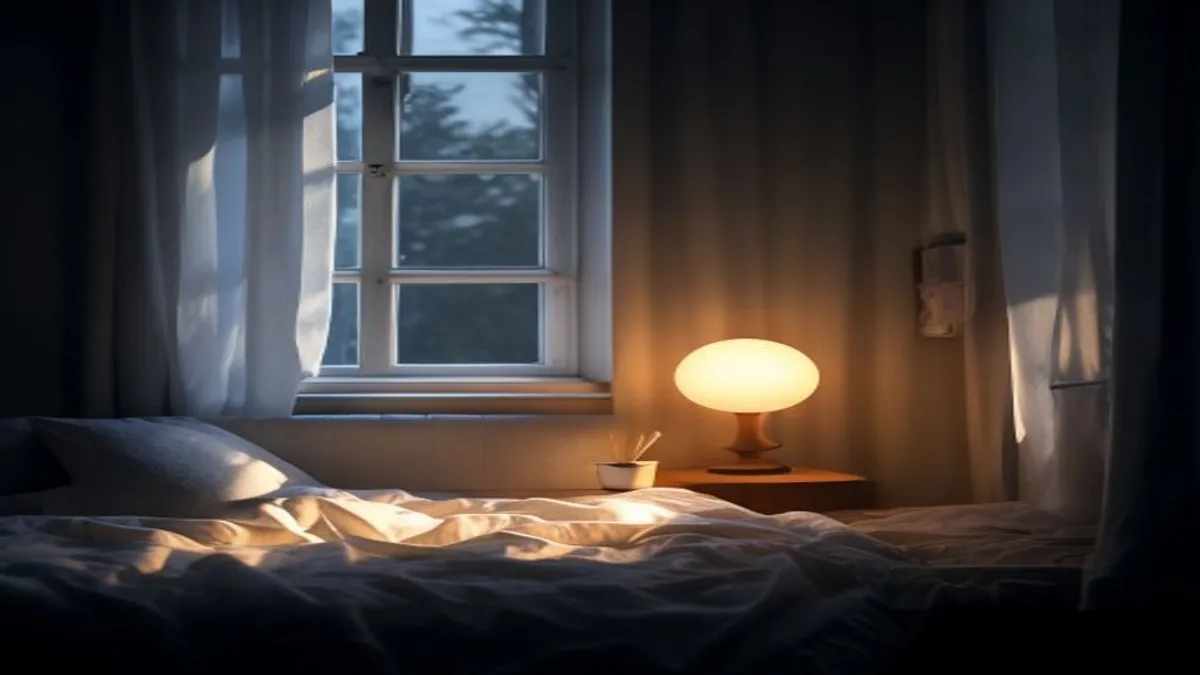
You climb into bed exhausted, and your heart rate spikes. Your brain, which was foggy with fatigue five minutes ago, suddenly feels like it's been plugged into an electrical socket. The pillow that should signal rest instead signals the start of another battle with your own mind.
This isn't weakness or overthinking — it's conditioned arousal, and it's more common than you realize. Your nervous system has learned to treat your bed as a threat rather than a sanctuary, and once this pattern sets in, willpower alone won't break it.
Nina, a marketing director from Portland, described it perfectly: "I started dreading 10 PM two years ago. Not because I wasn't tired — I was exhausted. But lying down felt like stepping into an anxiety chamber. My bed became the place where I cataloged every worry, every mistake, every thing I needed to do tomorrow."
Key Takeaway: Bedtime anxiety often stems from conditioned arousal — when your brain associates your bed with wakefulness instead of sleep. This creates a vicious cycle where the act of lying down triggers alertness, making sleep feel impossible even when you're physically exhausted.
What Actually Happens in Your Brain During Bedtime Anxiety
Conditioned arousal works like Pavlov's bell, except instead of salivating dogs, you have a hypervigilant nervous system. Every night you spend tossing and turning strengthens the neural pathway between "bed" and "alert." Your amygdala — the brain's alarm system — starts firing the moment your head hits the pillow.
Research from the University of Pennsylvania Sleep Center shows that people with conditioned arousal have measurably higher cortisol levels and increased brain activity in arousal-promoting regions when they enter their bedroom compared to a neutral sleep environment. Their bodies are literally preparing for battle, not rest.
The cruel irony? The harder you try to sleep, the more awake you become. Dr. Michael Perlis, who pioneered much of the research on conditioned arousal, found that people with this condition show increased muscle tension, elevated heart rate, and heightened cognitive activity specifically in their own beds — but not when sleeping elsewhere.
This explains why you might fall asleep easily on the couch watching Netflix but lie awake for hours in your actual bed. Your brain has learned that couch equals relaxation and bed equals struggle.
The timeline matters here. Acute bedtime anxiety — lasting a few nights or weeks — usually resolves when the triggering stressor (job loss, relationship conflict, health scare) passes. But chronic bedtime anxiety, persisting for months or years, indicates your nervous system has formed a learned association that requires specific intervention to break.
Try the Sleep Environment Score — audit your bedroom in 20 questions and get prioritized fixes. Free, works in your browser, no signup.
The Real Culprits Behind Your Bedtime Anxiety
Sleep Effort Syndrome
The most counterintuitive cause of bedtime anxiety is trying too hard to sleep. Sleep is a passive process — it happens to you, not something you actively do. But when sleep becomes elusive, most people double down on effort: stricter bedtime routines, more supplements, longer wind-down periods, meditation apps.
All of this effort creates performance anxiety around sleep. You start monitoring your sleep onset ("Is it working yet?"), which activates the same brain networks that keep you awake. A 2023 study in the Journal of Clinical Sleep Medicine found that people who scored highest on "sleep effort scales" took an average of 23 minutes longer to fall asleep than those who approached sleep more passively.
Bedroom Conditioning Gone Wrong
Your bedroom should be a conditioned cue for sleep, but many factors can hijack this association. Working from bed during the pandemic created one of the largest spikes in conditioned arousal cases sleep clinics had seen in decades. Suddenly, beds became associated with Zoom calls, deadlines, and daytime stress.
Other common conditioning mistakes include:
- Using your bed for worry sessions or difficult conversations
- Lying in bed awake for hours night after night
- Checking your phone in bed (the blue light is less problematic than the mental stimulation)
- Eating, watching intense TV, or doing work in your bedroom
Each time you're alert in your sleep environment, you're training your brain that this space requires vigilance.
The Anxiety-Insomnia Feedback Loop
Bedtime anxiety and sleep onset insomnia feed each other in a vicious cycle. Poor sleep increases next-day anxiety by 30%, according to UC Berkeley research. Higher anxiety makes the following night's sleep more elusive. After just a few iterations, you develop anticipatory anxiety about sleep itself.
This is different from garden-variety bedtime worry. With conditioned arousal, the physical act of lying down triggers fight-or-flight responses regardless of what you're thinking about. Your body has learned that horizontal equals hypervigilant.
How Stimulus Control Therapy Retrains Your Sleep Response
Stimulus control therapy sounds clinical, but it's elegantly simple: you teach your brain to associate your bed with sleep and nothing else. Developed by Richard Bootzin in the 1970s, it remains the most effective single intervention for conditioned arousal, with success rates around 80% when followed consistently.
The core principle: your bed should be strongly associated with sleep and sex, and nothing else. No reading, no scrolling, no lying awake stewing. If you're not asleep within 15-20 minutes, you leave the bed and return only when genuinely sleepy.
The Complete Stimulus Control Protocol
Rule 1: Go to bed only when sleepy. Not tired — sleepy. Tired is physical exhaustion. Sleepy is when your eyelids feel heavy and your thoughts start getting fuzzy. Most people with bedtime anxiety have lost touch with genuine sleepiness signals because they've been overriding them with scheduled bedtimes.
Rule 2: Use your bed only for sleep and sex. No phones, books, TV, or worry sessions. This feels extreme at first, especially if you've been a lifelong reader-in-bed person, but it's temporary. Once your sleep association is restored (usually 2-4 weeks), you can gradually reintroduce other activities.
Rule 3: If you're not asleep within 15-20 minutes, get up. This is the hardest rule because it feels counterproductive when you're tired. But lying awake in bed strengthens the arousal association. Leave the room and do a quiet, boring activity in dim light until you feel sleepy again.
Rule 4: Repeat rule 3 as many times as necessary. Some people get up 4-5 times the first few nights. This is normal and actually a sign the protocol is working. Each time you return to bed only when sleepy, you're strengthening the correct association.
Rule 5: Get up at the same time every morning regardless of how much you slept. This maintains your circadian rhythm and builds sleep pressure for the following night. No sleeping in to "catch up" — it undermines the entire process.
Rule 6: No napping. Naps reduce sleep drive and make it harder to fall asleep at bedtime, perpetuating the cycle.
What to Do During Middle-of-the-Night Awakenings
The same rules apply to 3 AM wake-ups. If you're awake for more than 15-20 minutes, get up. This prevents your brain from learning that bed is a place for midnight rumination sessions.
During your out-of-bed time, choose activities that are boring enough to maintain sleepiness but engaging enough to distract from sleep anxiety. Good options include:
- Reading something mildly interesting but not gripping (avoid thrillers or work-related material)
- Gentle stretching or progressive muscle relaxation
- Listening to podcasts or audiobooks at low volume
- Simple crafts like knitting or adult coloring books
Avoid screens if possible, but if you must use them, use blue light filters and keep brightness low. The goal isn't perfect sleep hygiene — it's breaking the bed-arousal association.
Advanced Techniques: Paradoxical Intention and Sleep Restriction
Paradoxical Intention: Try to Stay Awake
This sounds backwards, but paradoxical intention is remarkably effective for bedtime anxiety. Instead of trying to fall asleep, you try to stay awake with your eyes open while lying comfortably in bed. The technique works by removing performance pressure around sleep onset.
A 2019 study in Behavioral Sleep Medicine found that people with conditioned arousal who practiced paradoxical intention fell asleep 14 minutes faster on average than those using traditional sleep hygiene techniques. The key is truly committing to staying awake — not using reverse psychology on yourself.
Sleep Restriction Therapy
If stimulus control isn't enough, sleep restriction therapy can amplify its effects. You limit your time in bed to match your actual sleep time, creating mild sleep deprivation that makes sleep onset easier and deeper.
For example, if you're in bed 8 hours but only sleeping 5, you'd restrict your bed time to 5.5 hours initially. As your sleep efficiency improves (measured as time asleep divided by time in bed), you gradually increase bed time by 15-30 minutes per week.
This approach is particularly effective when combined with stimulus control because it ensures you're genuinely sleepy when you get into bed, making the association between bed and sleep stronger.
The Role of CBT-I in Treating Bedtime Anxiety
CBT-I explained as the gold standard treatment for chronic insomnia specifically targets the cognitive and behavioral patterns that maintain bedtime anxiety. While stimulus control addresses the conditioning component, CBT-I also tackles the thought patterns that fuel sleep anxiety.
Common cognitive distortions that worsen bedtime anxiety include:
- Catastrophic thinking about sleep loss ("I'll be useless tomorrow if I don't sleep")
- All-or-nothing thinking ("I need 8 hours or I can't function")
- Fortune telling ("I know I won't be able to sleep tonight")
CBT-I helps you identify and challenge these thoughts while implementing behavioral changes like stimulus control and sleep restriction. The combination is more effective than either approach alone, with remission rates around 70-80% for chronic insomnia.
When Bedtime Anxiety Signals Deeper Issues
Sometimes bedtime anxiety is the tip of the iceberg. If stimulus control therapy doesn't help within 4-6 weeks, or if your bedtime anxiety is accompanied by other symptoms, consider these underlying conditions:
Sleep apnea can create bedtime anxiety because your body subconsciously associates sleep with oxygen deprivation. If you snore, wake up gasping, or feel unrefreshed despite adequate sleep time, get evaluated for sleep-disordered breathing.
Hormonal changes during perimenopause, menopause, or thyroid disorders can trigger both insomnia and anxiety. Hot flashes, night sweats, or other hormonal symptoms alongside bedtime anxiety warrant medical evaluation.
Generalized anxiety disorder or panic disorder might manifest primarily at bedtime when there are fewer distractions from anxious thoughts. If you experience anxiety symptoms during the day as well, treating the underlying anxiety disorder is crucial.
Restless leg syndrome or periodic limb movement disorder can create an uncomfortable association with lying down, mimicking bedtime anxiety but requiring different treatment.
Building Your Personal Recovery Timeline
Week 1-2: Expect things to feel worse before they improve. You might get less sleep initially as you adjust to leaving bed when awake. This is normal and temporary.
Week 3-4: Most people start seeing improvements in sleep onset time and reduced bedtime anxiety. You'll begin to feel genuinely sleepy at bedtime rather than just tired.
Week 5-8: Sleep consolidates and deepens. Bedtime anxiety should be significantly reduced, and you'll trust your ability to fall asleep.
Month 3+: The new sleep association should feel natural. You can gradually reintroduce some in-bed activities if desired, but maintain the core principle of leaving bed when awake.
Remember that progress isn't always linear. Stress, illness, or life changes can temporarily disrupt your sleep, but the underlying healthy association between bed and sleep remains stronger.
Frequently Asked Questions
Why can't I fall asleep when I'm exhausted? Physical exhaustion doesn't override conditioned arousal. Your brain has learned to associate your bed with alertness, so lying down actually triggers wakefulness regardless of how tired your body feels.
How long should it take to fall asleep? Normal sleep onset is 10-20 minutes. If you're falling asleep in under 5 minutes, you're likely sleep deprived. Taking longer than 30 minutes regularly suggests a sleep disorder or conditioned arousal.
Should I get out of bed if I can't sleep? Yes, after 15-20 minutes of lying awake. Stay out until you feel genuinely sleepy, then return to bed. This prevents your brain from associating bed with wakefulness.
Can bedtime anxiety be cured permanently? Yes, with consistent stimulus control therapy, most people break conditioned arousal within 2-4 weeks. The key is strict adherence to the protocol even when it feels counterintuitive.
Is it normal to feel anxious about bedtime? Occasional bedtime worry is normal, but persistent dread of going to bed indicates conditioned arousal. This affects roughly 15% of adults with chronic insomnia and requires specific treatment.
Your next step is to start stimulus control therapy tonight. Set a timer for 20 minutes when you get into bed. If you're not asleep when it goes off, get up and do something quiet and boring until you feel genuinely sleepy. Then return to bed and repeat if necessary. It will feel wrong at first — that's exactly why it works. (For more, see Week 10: sleep restriction therapy.)
Frequently asked questions
Keep going
Science-backed help, delivered daily. No gadget reviews, no affiliate links. Just what works.
Sleep better tonight.
One short, practical email a day with real sleep science and techniques you can use before bed. Unsubscribe anytime.
Keep reading
Can't Get Back to Sleep After Waking Up? Here's the Science-Backed Fix
The 15-minute rule and why lying in bed awake makes middle-of-the-night insomnia worse. Evidence-based strategies to fall back asleep fast.

Sleep Anticipatory Anxiety: When Worrying About Not Sleeping Keeps You Awake
The cruel irony of insomnia: the more you worry about not sleeping, the harder it becomes to fall asleep. Here's how to break the cycle tonight.

My Mind Won't Shut Off at Night: The Hyperarousal Fix
Racing thoughts keeping you awake? Learn why your mind won't shut off at night and the science-backed techniques that actually work for hyperarousal.
How to Stop Racing Thoughts at Night (What Sleep Doctors Actually Recommend)
Racing mind at night keeping you awake? Sleep medicine research reveals why your brain won't shut up and the specific techniques that actually work to quiet it.