Physically Exhausted But Can't Sleep: Why Your Body and Mind Are Out of Sync
When you're physically drained but mentally wired at bedtime, your nervous system is stuck in overdrive. Here's how to break the cycle tonight.
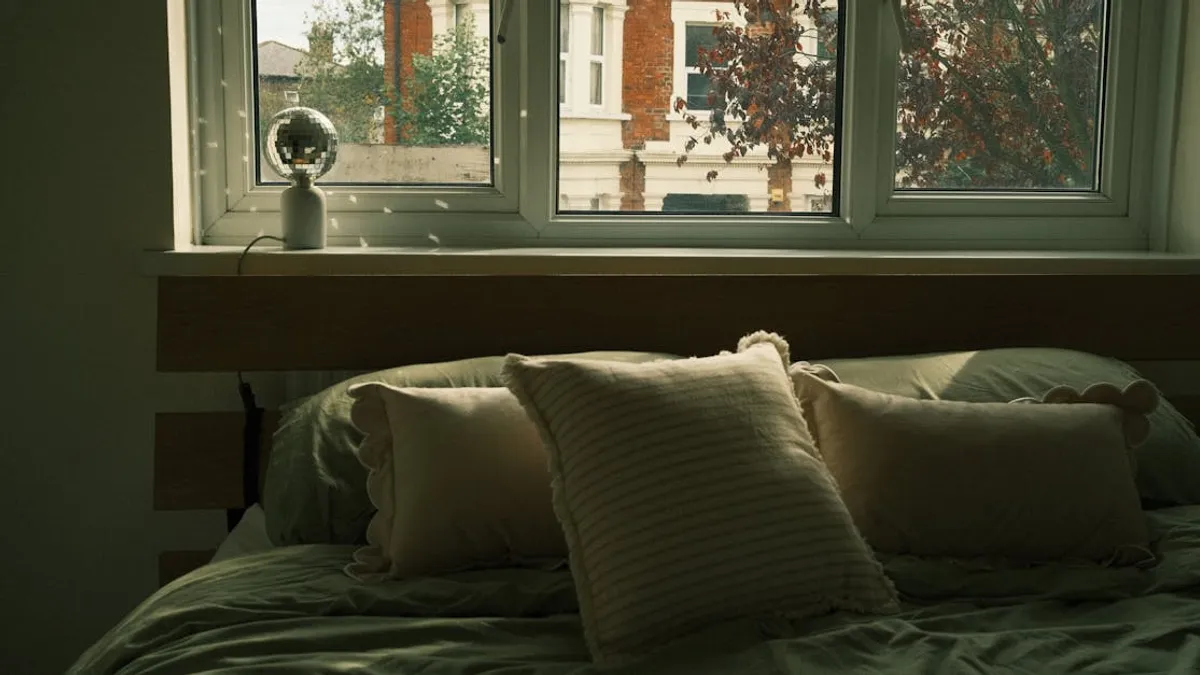
Your legs feel like concrete. Your shoulders ache. You've been running on fumes for hours, maybe days. But the second your head hits the pillow, your brain starts its nightly inventory of every unfinished task, awkward conversation, and potential catastrophe waiting in tomorrow's shadows.
You're physically exhausted but can't sleep — a maddening disconnect that leaves you staring at the ceiling while your body screams for rest. This isn't about willpower or "trying harder" to relax. Your nervous system is stuck in a gear that doesn't match your body's actual needs.
The problem runs deeper than most sleep advice acknowledges. When you're physically drained but mentally wired, standard recommendations like "avoid screens" or "try chamomile tea" miss the mark entirely. You need to understand why your body and brain are operating on different frequencies — and how to get them back in sync.
Key Takeaway: Physical exhaustion and mental fatigue are controlled by different systems. Your body can be depleted while your sympathetic nervous system keeps firing stress hormones that block sleep onset, creating the "tired but wired" state that traps millions of people nightly.
Why Your Exhausted Body Won't Let You Sleep
Your brain doesn't automatically shut down when your muscles are tired. Sleep is regulated by your circadian rhythm, adenosine buildup (the chemical that makes you drowsy), and your autonomic nervous system — not by how many hours you've been awake or how hard you've worked.
When you're physically exhausted but can't sleep, your sympathetic nervous system is overriding everything else. This fight-or-flight response floods your bloodstream with cortisol and adrenaline, keeping your mind alert even when your body is running on empty. Your heart rate stays elevated, your muscles remain tense despite their fatigue, and your thoughts race faster than usual.
Research from the Sleep Research Society shows that 68% of people experiencing acute stress report this exact pattern — physical depletion paired with sleep onset delays of 45 minutes or longer. The disconnect happens because stress hormones can stay elevated for 3-6 hours after the initial trigger, long after you think you've "calmed down."
Three common triggers create this mismatch:
Late-day exercise spikes your core body temperature and cortisol levels. While regular exercise improves sleep quality, working out within 3-4 hours of bedtime can delay sleep onset by 30-60 minutes, even when you feel physically drained afterward.
Caffeine clearance issues affect about 25% of adults more severely than average. If you metabolize caffeine slowly, that 2 p.m. coffee can still be circulating at 10 p.m., blocking adenosine receptors that signal sleepiness while your body feels increasingly tired.
Hypervigilance from stress or trauma keeps your nervous system scanning for threats, regardless of physical fatigue. Your brain interprets the quiet of bedtime as a vulnerable moment and ramps up alertness as a protective mechanism.
The Cortisol-Sleep Collision
Cortisol follows a natural daily rhythm, peaking around 8 a.m. and gradually declining throughout the day to reach its lowest point around 11 p.m. to midnight. This drop signals your body that it's safe to sleep. But when you're physically exhausted but can't sleep, something has disrupted this pattern.
Chronic stress, intense physical exertion, or even positive excitement can cause a secondary cortisol spike in the evening. Your adrenal glands release more of this alerting hormone just when it should be tapering off. The result? Your body feels heavy and tired, but your mind stays sharp and anxious.
A 2024 study in the Journal of Clinical Endocrinology found that people with evening cortisol spikes took an average of 52 minutes to fall asleep, compared to 18 minutes for those with normal cortisol patterns. Even more telling: their subjective fatigue ratings were actually higher than the control group, meaning they felt more tired but slept worse.
This explains why you can feel utterly depleted yet find yourself mentally composing tomorrow's emails or replaying today's conversations. Your fatigue is real, but it's not the kind that leads to sleep.
Breaking the Cortisol Cycle Tonight
The fastest way to interrupt an evening cortisol spike is temperature manipulation. A cold rinse or splash of water on your face and wrists activates your parasympathetic nervous system — the "rest and digest" response that opposes fight-or-flight.
Run cold water over your wrists for 30-60 seconds, then splash your face. This isn't about comfort; it's about biology. The cold triggers your vagus nerve, which sends a direct signal to lower your heart rate and cortisol production. You should notice your breathing slow within 2-3 minutes.
Progressive muscle relaxation works differently but targets the same goal. Starting with your toes, tense each muscle group for 5 seconds, then release completely. The contrast between tension and relaxation helps your nervous system recognize the difference between alertness and rest. Work your way up your body systematically — calves, thighs, abdomen, shoulders, arms, face.
The key is accepting that this might be a difficult sleep night rather than fighting it. Anxiety about not sleeping often compounds the original problem. If you're still awake after 20-30 minutes of genuine rest attempts, get out of bed and do a quiet activity until you feel genuinely drowsy.
When Physical Exhaustion Becomes a Sleep Pattern
If you're regularly physically exhausted but can't sleep, you might be developing sleep onset insomnia — a specific type of insomnia where falling asleep becomes consistently difficult despite adequate fatigue. This often starts as an acute response to stress but can become a learned pattern.
Your brain begins to associate bedtime with struggle rather than rest. The bedroom becomes a place of frustration instead of recovery. Even when the original stressor resolves, the sleep difficulty persists because your nervous system has been conditioned to expect problems.
Cognitive Behavioral Therapy for Insomnia (CBT-I) is the gold standard treatment for breaking these patterns. CBT-I explained involves sleep restriction, stimulus control, and cognitive restructuring — essentially retraining your brain to associate bed with successful sleep rather than wakeful anxiety.
Sleep restriction might seem counterintuitive when you're already exhausted, but it works by building stronger sleep pressure. If you're spending 9 hours in bed but only sleeping 6, you restrict your time in bed to 6.5 hours. This creates more concentrated fatigue that can override the nervous system activation keeping you awake.
The Exercise Timing Factor
If your physical exhaustion comes from late-day workouts, the timing matters more than the intensity. Exercise releases endorphins and raises your core body temperature — both alerting mechanisms that can interfere with sleep onset for 3-4 hours.
A 2025 meta-analysis in Sleep Medicine Reviews found that people who exercised within 4 hours of bedtime had sleep onset delays averaging 14 minutes longer than those who finished workouts earlier. The effect was most pronounced for high-intensity cardio and strength training.
Morning exercise, by contrast, can actually improve your ability to fall asleep when physically exhausted. It helps regulate your circadian rhythm and ensures that the alerting effects of exercise occur when you want to be awake, not when you're trying to wind down.
If you must exercise in the evening, try lower-intensity activities like yoga, walking, or stretching. These can help discharge physical tension without triggering the stress response that keeps you mentally wired.
The Caffeine Wildcard
Caffeine metabolism varies dramatically between individuals. While the average half-life is 5-6 hours, some people clear caffeine much more slowly due to genetic variations in the CYP1A2 enzyme. If you're a slow metabolizer, afternoon caffeine can still be affecting your sleep at bedtime.
This creates a particularly cruel cycle: you're physically tired from poor sleep, so you drink more caffeine to function, which then interferes with the next night's sleep. The exhaustion is real, but the caffeine is blocking the adenosine receptors that would normally make you feel sleepy.
Try cutting off all caffeine by noon for one week and see if your "tired but wired" pattern improves. If you're dependent on afternoon caffeine, replace it with a 10-minute walk or brief exposure to bright light, both of which can provide alertness without the sleep interference.
Recovery Protocol for Tonight
When you're caught in the physically exhausted but can't sleep cycle, here's what actually works:
First 20 minutes in bed: Focus on physical relaxation rather than trying to fall asleep. Do progressive muscle relaxation or practice slow, deep breathing. Your goal is nervous system regulation, not unconsciousness.
If still awake after 20-30 minutes: Get up and leave the bedroom. This isn't giving up; it's preventing your brain from associating bed with wakeful struggle. Go to a dimly lit room and do something genuinely boring — read something dry, do a simple puzzle, or practice gentle stretches.
Return to bed only when sleepy: You'll know you're ready when your eyelids feel heavy and your thoughts start to drift. This might take 20 minutes or 2 hours — the timing varies based on how activated your nervous system was.
Accept the difficult night: Fighting the insomnia often makes it worse. Remind yourself that one night of poor sleep, while unpleasant, won't cause lasting harm. Sometimes the best thing you can do is rest your body even if your mind stays partially alert.
Frequently Asked Questions
Why can't I fall asleep when I'm exhausted? Your sympathetic nervous system is overriding your body's fatigue signals. Stress hormones like cortisol and adrenaline keep your brain alert even when your muscles are depleted.
How long should it take to fall asleep? Normal sleep onset is 10-20 minutes. If you're regularly taking 30+ minutes despite exhaustion, you likely have sleep onset insomnia that needs specific treatment.
Should I get out of bed if I can't sleep? Yes, after 20-30 minutes of lying awake. Go to another room and do a quiet activity until you feel genuinely sleepy, then return to bed.
Can too much exercise cause insomnia? Exercise within 3-4 hours of bedtime can spike cortisol and body temperature, making sleep difficult. Morning or afternoon workouts improve sleep quality instead.
Will this get better on its own? Acute cases from stress or schedule changes often resolve in 1-2 weeks. Chronic patterns lasting over a month typically need targeted intervention like CBT-I.
The next time you find yourself physically exhausted but can't sleep, try the cold water technique first — 60 seconds on your wrists and face. If that doesn't help within 30 minutes, get out of bed and do something quiet in another room. Your body will eventually sync up with your mind, but sometimes you have to stop fighting the process and let it happen naturally.
Frequently asked questions
Keep going
Science-backed help, delivered daily. No gadget reviews, no affiliate links. Just what works.
Sleep better tonight.
One short, practical email a day with real sleep science and techniques you can use before bed. Unsubscribe anytime.
Keep reading
Stress-Induced Insomnia: When Life Wrecks Your Sleep
Your stress response hijacks sleep through hyperarousal and cortisol spikes. Here's what happens in your body and how to break the cycle before it becomes chronic.
Why Do I Wake Up Exactly 4 Hours After Falling Asleep Every Night?
That 3-4 hour wake-up isn't broken sleep—it's your brain transitioning between sleep stages. Here's why it happens and what actually helps.

Why You Wake Up Every 2 Hours: The Sleep Cycle Trap Explained
Waking every 2 hours isn't random—it's your sleep cycles fragmenting. Learn why this happens and the specific fixes that actually work tonight.

Getting a Second Wind at Bedtime? Here's Why Your Body Fights Sleep
Missing your sleep window triggers a cortisol surge that keeps you wired. Learn to catch your natural sleep wave and what to do when you miss it.